





In an unprecedented display of coordinated political activism, anti-Trump protests have erupted simultaneously across all fifty U.S. states and numerous international cities. This massive mobilization represents one of the largest coordinated political demonstrations in recent history, raising important questions about political polarization, democratic expression, and the global impact of American politics.
A Nationwide Movement Takes Shape
The protests, which began forming shortly after President Trump’s inauguration in January 2025, have grown steadily in both size and scope. Initially concentrated in traditional progressive strongholds like New York, Los Angeles, and Chicago, the movement has expanded to encompass demonstrations in every state, including traditionally conservative regions where such protests might have seemed unlikely just months ago.
In major metropolitan areas, turnout has frequently exceeded tens of thousands, with particularly large gatherings in Washington D.C., where protesters have assembled near the White House, and in New York City, where demonstrations have centered around Trump Tower. However, what makes this movement particularly remarkable is its presence in smaller communities across America’s heartland, where local organizers have mobilized surprisingly substantial crowds.
The demonstrations have varied in tone and focus, but common themes have emerged across protest sites. Participants have expressed concerns about policies related to healthcare, immigration, environmental protection, and what many describe as threats to democratic norms and institutions. Signs referencing the contested 2024 election also remain prevalent, reflecting ongoing disagreements about election integrity that continue to divide the nation.
The International Dimension

Perhaps most striking about these protests is their international dimension. From London to Sydney, Tokyo to Cape Town, demonstrations have materialized in cities across six continents. These international protests have generally been smaller than their American counterparts but nonetheless significant in demonstrating global interest and concern regarding U.S. political developments.
In European capitals, where skepticism of Trump’s approach to NATO and international relations runs high, protesters have emphasized themes of democratic solidarity and the interconnected nature of global politics. Signs in multiple languages have expressed support for American protesters while highlighting concerns about global implications of U.S. policies.
“What happens in America affects us all,” said Maria Solano, an organizer in Madrid, where several thousand gathered in the city center. “Democratic backsliding anywhere threatens democracy everywhere.”
Organization and Coordination
The scale and synchronization of these protests reflect sophisticated organizing efforts that have leveraged social media, grassroots networks, and established activist infrastructure. Multiple organizations have played roles in coordinating these demonstrations, though no single group claims overall leadership of the movement.
Digital platforms have proven essential to the movement’s growth and coordination. Hashtags associated with the protests have consistently trended across social media platforms, while encrypted messaging apps have facilitated planning among organizers. This digital infrastructure has allowed for remarkable coordination despite the decentralized nature of the movement.
Financial support for these demonstrations has come primarily through small-dollar donations, according to organizers who have emphasized the grassroots nature of their funding model. However, critics have questioned whether larger political organizations might be providing resources behind the scenes.
Diverse Voices and Perspectives
The protesters themselves represent a diverse coalition spanning demographic categories and including both longtime activists and first-time demonstrators. Interviews with participants reveal varying motivations and priorities, though united by shared concerns about the current administration.
“I’ve never attended a protest before in my life,” said James Wilson, a 62-year-old former manufacturing worker in Lansing, Michigan. “But I’m worried about my grandchildren’s future in a way I’ve never been before.”
For younger participants, climate concerns frequently top the list of grievances. “Four more years of environmental deregulation could be catastrophic,” explained Zoe Chen, a 19-year-old student attending a demonstration in Austin, Texas. “We can’t afford to wait.”
Response from Administration and Supporters
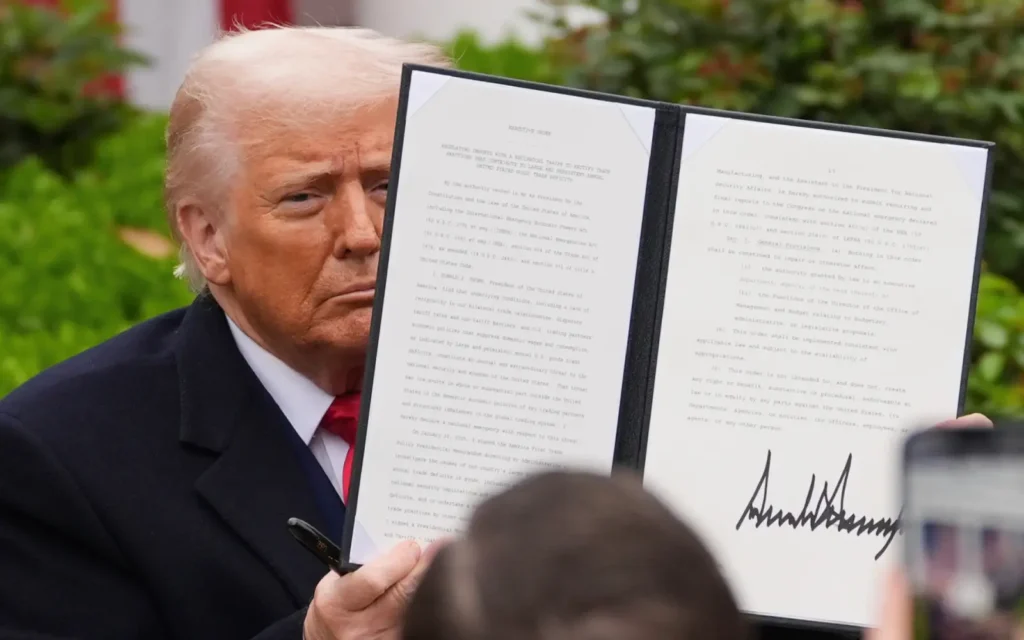
The Trump administration has dismissed the protests as representing a vocal minority out of step with the broader American public. In a statement, White House Press Secretary commented: “President Trump was elected by the American people to bring necessary changes to Washington. These demonstrations represent the same opposition voices that failed to convince voters in November.”
Trump supporters have organized smaller counter-demonstrations in some locations, emphasizing themes of economic growth, border security, and support for the president’s policy agenda. These gatherings have generally been peaceful, though tense exchanges between opposing groups have occurred in several cities.
In rural and conservative-leaning areas, where Trump maintains strong support, many residents have expressed frustration with media coverage that they believe overemphasizes opposition to the administration while underrepresenting supportive viewpoints.
Media Coverage and Public Perception
Media coverage of the protests has itself become a subject of debate, with conservative outlets generally minimizing their significance while progressive outlets highlight their historic scale. This divergence in coverage reflects broader media polarization that continues to shape how Americans perceive political events.
Polling suggests Americans remain sharply divided in their assessment of the protests. According to recent surveys, approximately half of Americans express some level of support for the demonstrations, while slightly fewer disapprove, with the remainder undecided. These divisions largely mirror partisan affiliations, though independents appear somewhat more supportive than not of protesters’ right to demonstrate.
Looking Forward: Sustaining Momentum
As the movement enters its second month, questions emerge about its sustainability and potential impact. Historical precedents suggest that maintaining momentum for protest movements typically proves challenging as initial enthusiasm wanes and organizational resources become strained.
Organizers have emphasized the importance of translating protest energy into sustained political engagement. “Demonstrations are just the beginning,” noted activist Teresa Johnson at a rally in Philadelphia. “We need to build power through community organizing, voter registration, and direct advocacy with elected officials.”
Some political analysts suggest the movement might significantly impact upcoming midterm elections if it succeeds in maintaining engagement among its participants. Others caution that backlash against protests could potentially energize administration supporters if demonstrations are perceived as disruptive or extreme.
Conclusion: A Defining Moment for American Democracy
Whatever their ultimate impact, these protests already represent a defining feature of America’s current political landscape. They reflect deep divisions regarding the country’s direction while simultaneously demonstrating the vitality of civic engagement across diverse communities.
The coming months will reveal whether this movement represents a momentary expression of discontent or the beginning of a sustained campaign that shapes American politics throughout Trump’s second term. Either way, these demonstrations have already secured their place in the historical record as one of the most extensive protest movements in modern American history—a testament to both the polarization of our times and the enduring importance of public demonstration in democratic societies.
As these protests continue across America and beyond, they remind us that democracy has always been nourished by the participation of citizens willing to stand publicly for their vision of what their country can and should be.