


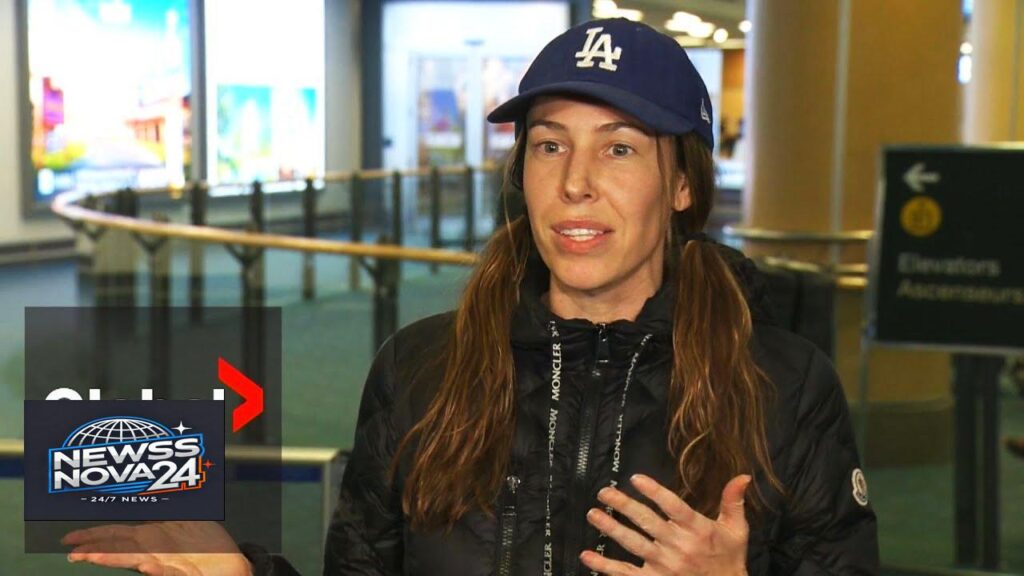
Canadian actress and entrepreneur Jasmine Mooney, known for her role in “American Pie Presents: The Book of Love,” recently endured a harrowing 12-day detention by U.S. Immigration and Customs Enforcement (ICE) while attempting to renew her work visa. Her experience has shed light on the challenges and conditions faced by detainees under current U.S. immigration policies.
Background on Jasmine Mooney
Jasmine Mooney, 35, hails from Canada and has built a diverse career in entertainment and business. Beyond her acting endeavors, she co-founded Holy! Water, a wellness beverage brand that gained attention for its innovative approach to health drinks. Her entrepreneurial spirit led her to split her time between Canada and the United States, necessitating appropriate work visas to manage her business interests effectively.
The Detention Incident
On March 3, 2025, Mooney attempted to enter the United States via the San Ysidro border crossing between Mexico and San Diego. Her goal was to renew her work visa, armed with a new job offer and supporting documentation. However, complications arose due to perceived inadequacies in her visa application, leading to her detention by U.S. Customs and Border Protection (CBP) officials. Instead of being advised to rectify her application or return to Canada, Mooney was taken into custody.
Conditions of Detention
Mooney’s account of her detention paints a grim picture of the conditions within ICE facilities. She described being placed in a cold cell with minimal amenities, forced to sleep on a mat without a blanket or pillow, and provided only an aluminum foil sheet for warmth. She likened this experience to being “wrapped up like a corpse.” The lack of proper nutrition led her to abstain from eating the provided food, resulting in noticeable weight loss during her confinement.
The ordeal intensified when, along with approximately 30 other women, Mooney was transferred to another detention center in Arizona. This transfer occurred in the middle of the night, with detainees shackled and deprived of sleep for extended periods. Mooney expressed feelings of being kidnapped and subjected to a “deeply disturbing psychological experiment,” highlighting the traumatic nature of her experience.
Family’s Response and Advocacy
Mooney’s mother, Alexis Eagles, became a vocal advocate for her daughter’s release. She utilized social media platforms to draw attention to the situation, criticizing the inhumane treatment her daughter faced. Eagles detailed how detainees were confined in concrete cells without natural light, subjected to constant fluorescent lighting, and lacked basic necessities like mats and blankets. Her efforts, alongside media coverage, played a crucial role in amplifying Mooney’s plight and applying pressure on authorities.
Release and Reflections
After 12 days in detention, Mooney was released and returned to Vancouver on March 15, 2025. Upon her arrival, she expressed profound gratitude towards her support system, acknowledging that the collective efforts of friends, family, and the media were instrumental in securing her release. She admitted to still processing the traumatic experience and emphasized the need to raise awareness about the conditions within detention centers.
Implications and Broader Context
Mooney’s detention underscores the complexities and potential pitfalls within the U.S. immigration system, especially under stringent policies. Her case highlights how individuals, even those with legitimate reasons for entry and no criminal records, can find themselves ensnared in bureaucratic challenges leading to severe consequences.
The conditions described by Mooney align with longstanding criticisms of ICE detention facilities, where reports have frequently cited inadequate living conditions, lack of medical care, and psychological stress imposed on detainees. Her experience adds a personal narrative to these systemic issues, emphasizing the urgent need for policy reforms and humane treatment of individuals in custody.
Conclusion
Jasmine Mooney’s ordeal serves as a poignant reminder of the human impact of immigration policies and enforcement practices. Her willingness to share her story brings attention to the often-overlooked conditions within detention centers and the emotional toll on those detained. As discussions about immigration reform continue, personal accounts like Mooney’s play a vital role in shaping public perception and influencing policy decisions towards more compassionate and just practices.