




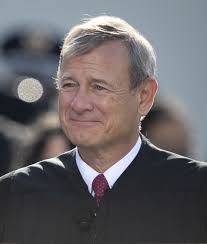
Chief Justice John Roberts Rebukes President Trump’s Call for Judicial Impeachment
In a rare public statement, Chief Justice John Roberts has openly criticized President Donald Trump’s recent calls for the impeachment of federal judges who have ruled against his administration’s policies. This development underscores the ongoing tension between the executive branch and the judiciary, highlighting the delicate balance of power within the United States government.
The Catalyst: Judge Boasberg’s Ruling
The controversy began when Chief Judge James Boasberg of the U.S. District Court for the District of Columbia issued a temporary restraining order halting the deportation of certain Venezuelan nationals. These individuals were targeted for expedited removal under a recent executive order invoking the Alien Enemies Act, which the administration cited as authority for the deportations. Judge Boasberg’s decision effectively paused these deportations, granting a 14-day period for further legal review.
President Trump’s Reaction
In response to Judge Boasberg’s ruling, President Trump publicly criticized the decision and called for the judge’s impeachment. He argued that such judicial interventions impede the enforcement of national immigration policies and compromise national security. The President’s remarks were part of a broader pattern of expressing frustration with judicial decisions that obstruct his administration’s initiatives
Chief Justice Roberts’ Response
Chief Justice John Roberts responded to the President’s comments by issuing a statement emphasizing the importance of judicial independence. He asserted that impeachment is not an appropriate response to disagreements with judicial decisions and highlighted the established process of appellate review for addressing such disputes. Roberts’ statement underscored the judiciary’s role in interpreting the law free from political influence, maintaining that judges must be able to make decisions based on legal principles without fear of retribution.
Historical Context of Judicial Impeachment
Impeachment of federal judges is an infrequent occurrence in American history, reserved for instances of serious misconduct, such as ethical violations or criminal behavior. The Constitution grants judges life tenure to ensure their ability to make impartial decisions without succumbing to political pressures. Utilizing impeachment as a tool to challenge judicial rulings poses a threat to the foundational principle of separation of powers, potentially undermining the judiciary’s independence.
Reactions from Legal Experts and Lawmakers
The President’s call for Judge Boasberg’s impeachment has elicited a spectrum of reactions:
- Legal Community: Many legal scholars and practitioners have expressed concern that targeting judges for their rulings could erode public confidence in the judicial system and deter judges from making decisions based on law rather than political considerations.
- Congressional Response: While some of the President’s allies have echoed his sentiments, introducing articles of impeachment against Judge Boasberg, the likelihood of such measures advancing in a divided Congress remains uncertain. Opponents argue that this approach sets a dangerous precedent for judicial independence.
Implications for the Separation of Powers
This incident highlights the inherent tensions within the U.S. system of checks and balances:
- Executive vs. Judiciary: The executive branch’s criticism of judicial decisions raises questions about respect for the judiciary’s role in interpreting laws and checking executive actions.
- Judicial Independence: Efforts to impeach judges based on their rulings could lead to a judiciary that is less willing to rule against the executive branch, undermining its role as an independent arbiter.
Chief Justice Roberts’ Previous Stance
This is not the first time Chief Justice Roberts has defended the judiciary against executive criticism. In previous instances, he has reiterated the importance of an independent judiciary, free from political influence, as essential to upholding the rule of law and maintaining public trust in the legal system.
Conclusion
Chief Justice John Roberts’ recent rebuke of President Trump’s call for the impeachment of Judge Boasberg serves as a reaffirmation of the judiciary’s independence and its critical role in the American constitutional framework. As the nation continues to navigate complex legal and political challenges, the preservation of judicial impartiality remains a cornerstone of democracy, ensuring that the rule of law prevails over partisan interests.