


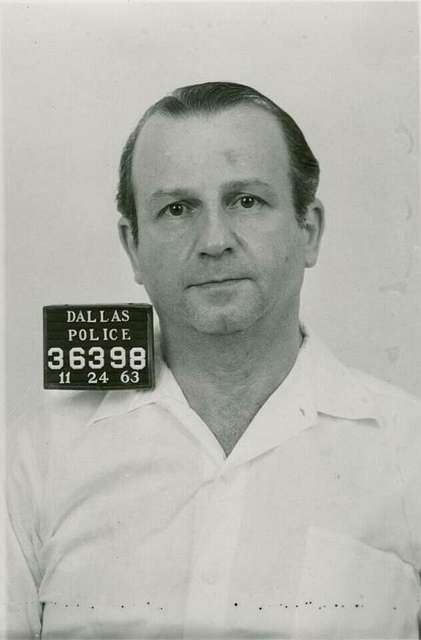
The Enigmatic Life of Jack Ruby: The Man Who Killed Lee Harvey Oswald
Jack Ruby remains one of the most enigmatic figures in American history, forever tied to the assassination of President John F. Kennedy and the subsequent murder of Lee Harvey Oswald, the man accused of killing the president. Ruby’s actions on November 24, 1963, shocked the nation and fueled countless conspiracy theories. But who was Jack Ruby, and what drove him to commit such a brazen act? This blog delves into Ruby’s life, his motivations, and the lasting impact of his actions.
Early Life and Background
Jack Ruby was born Jacob Leon Rubenstein on March 25, 1911, in Chicago, Illinois. He was the fifth of eight children born to Joseph Rubenstein and Fannie Turek Rutkowski, Jewish immigrants from Poland. Ruby’s childhood was marked by poverty and instability. His parents’ marriage was tumultuous, and the family often struggled to make ends meet. Ruby dropped out of school at a young age and became involved in street gangs, developing a reputation for being quick-tempered and aggressive.
In his early adulthood, Ruby moved to Los Angeles, where he worked odd jobs and became involved in the nightlife scene. He eventually returned to Chicago, where he managed a union local and became acquainted with organized crime figures. Ruby’s connections to the underworld would later become a focal point for conspiracy theorists who speculated about his role in the Kennedy assassination.
The Move to Dallas
In 1947, Ruby relocated to Dallas, Texas, where he hoped to start fresh. He opened a series of nightclubs and strip joints, including the Carousel Club, which became a popular spot for locals and tourists alike. Ruby was known for his flamboyant personality and his willingness to bend the rules to keep his businesses afloat. He cultivated relationships with police officers, politicians, and journalists, often providing them with free drinks and entertainment in exchange for favors.
Despite his outward bravado, Ruby was deeply insecure and prone to bouts of depression. He craved recognition and respect but often found himself on the fringes of society. His nightclubs were frequented by a mix of shady characters and law enforcement, creating an environment where boundaries were often blurred.
The Kennedy Assassination and Ruby’s Infamous Act
On November 22, 1963, President John F. Kennedy was assassinated in Dallas while riding in a motorcade through Dealey Plaza. The nation was plunged into mourning, and within hours, Lee Harvey Oswald was arrested and charged with the murder. Two days later, on November 24, Oswald was being transferred from the Dallas Police Headquarters to the county jail when Jack Ruby stepped out of the crowd and shot him at point-blank range. The shooting was broadcast live on television, shocking millions of viewers.
Ruby’s motives for killing Oswald remain a subject of debate. He claimed that he acted out of grief and anger over Kennedy’s death, hoping to spare Jacqueline Kennedy the pain of a lengthy trial. However, many have questioned this explanation, pointing to Ruby’s ties to organized crime and his erratic behavior in the days leading up to the shooting. Some conspiracy theorists believe that Ruby was part of a larger plot to silence Oswald and cover up the truth about Kennedy’s assassination.
The Trial and Imprisonment
Ruby was immediately arrested and charged with the murder of Lee Harvey Oswald. His trial began in March 1964, and the proceedings were closely watched by the media and the public. Ruby’s defense team argued that he was mentally unstable and had acted impulsively, but the jury found him guilty of murder with malice. He was sentenced to death.
While awaiting appeal, Ruby’s mental and physical health deteriorated. He claimed that he had been injected with cancer cells as part of a conspiracy to silence him, and he repeatedly asked to be transferred to Washington, D.C., where he could testify about the Kennedy assassination. In 1966, Ruby’s conviction was overturned on the grounds that the trial should have been moved out of Dallas due to the intense media coverage. Before a new trial could take place, Ruby died of a pulmonary embolism on January 3, 1967, at the age of 55.
The Legacy of Jack Ruby
Jack Ruby’s actions on November 24, 1963, have left an indelible mark on American history. His murder of Lee Harvey Oswald not only deprived the public of a trial but also fueled speculation about a larger conspiracy. The Warren Commission, which investigated Kennedy’s assassination, concluded that Ruby acted alone and was not part of any plot. However, many remain unconvinced, and Ruby’s ties to organized crime, his erratic behavior, and his own cryptic statements have kept the debate alive.
Ruby’s life is a study in contradictions. He was a man who sought respectability but operated in the shadowy world of nightclubs and organized crime. He was capable of great loyalty and generosity but also prone to violent outbursts. His actions in the aftermath of the Kennedy assassination have made him a central figure in one of the most enduring mysteries of the 20th century.
Conspiracy Theories and Unanswered Questions
The Kennedy assassination has spawned countless conspiracy theories, and Jack Ruby is often at the center of these speculations. Some believe that Ruby was acting on behalf of organized crime figures who wanted to silence Oswald. Others suggest that Ruby was connected to intelligence agencies or political operatives who sought to cover up the truth. Ruby’s own statements, including his claim that he was “set up” and his desire to tell the truth, have only added to the intrigue.
Despite decades of investigation, many questions about Ruby’s role in the Kennedy assassination remain unanswered. Was he a lone actor driven by emotion, or was he part of a larger conspiracy? Why did he wait until Oswald was in police custody to act? And what, if anything, did he know about the events surrounding Kennedy’s death?
Conclusion
Jack Ruby’s life and actions continue to fascinate and perplex historians, researchers, and the general public. His decision to kill Lee Harvey Oswald in the basement of the Dallas Police Headquarters was a moment of shocking violence that altered the course of history. Whether motivated by personal grief, a desire for notoriety, or something more sinister, Ruby’s actions have ensured that he will forever be remembered as a key figure in one of the most tragic and controversial events of the 20th century.
As we reflect on Ruby’s life, we are reminded of the complexities of human nature and the enduring power of unanswered questions. The story of Jack Ruby is not just a tale of one man’s actions but a window into a turbulent period in American history, a time when the nation was forced to confront its darkest fears and uncertainties.