


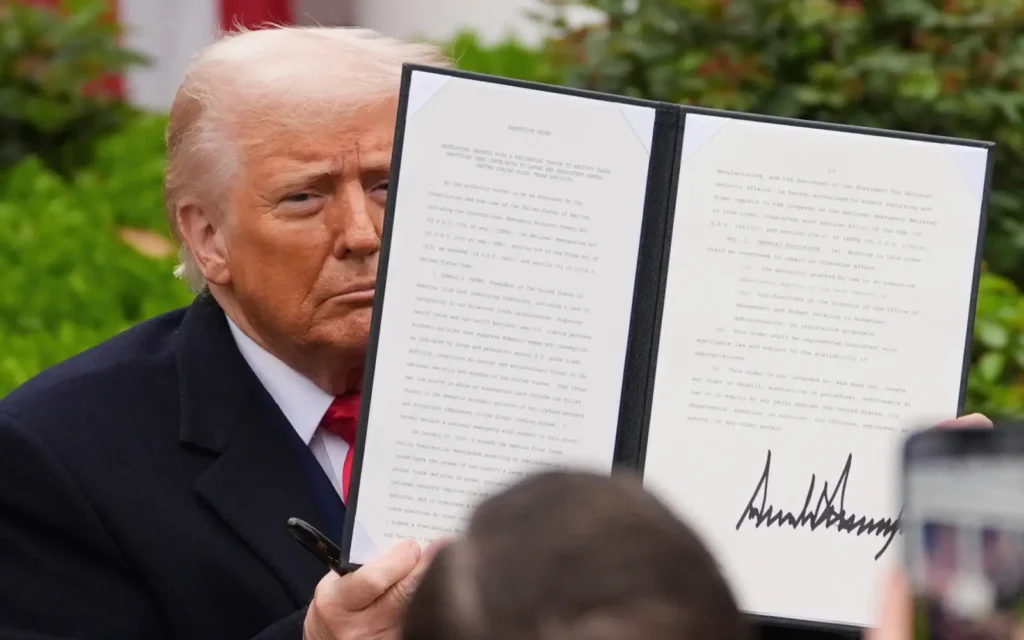
The first quarter of President Donald Trump’s return to the White House has been marked by significant economic policy shifts, with his administration’s aggressive stance on tariffs sending ripples through global markets. As Trump moves to implement his “America First” trade agenda for a second time, Wall Street is carefully assessing the potential long-term implications for corporate earnings, inflation, and global supply chains.
The New Tariff Landscape
Since his January 2025 inauguration, President Trump has wasted no time in pursuing the trade policies he promised during his campaign. His administration has announced plans for:
- A universal 10% tariff on all imported goods
- Additional targeted tariffs of up to 60% on Chinese imports
- New tariffs on Mexican and Canadian goods despite the USMCA framework
- Potential tariffs on European automobiles and luxury goods
Treasury Secretary [Name] has framed these measures as necessary to “rebalance America’s trade relationships” and strengthen domestic manufacturing. However, the immediate market reaction has been mixed, with significant sector-by-sector divergence.

Market Performance: Winners and Losers
The S&P 500 has experienced increased volatility in response to the tariff announcements, with the index declining approximately 4.2% since the initial universal tariff proposal in February. However, this broad figure masks significant sectoral differences.
Sectors Outperforming:
Domestic Manufacturing: Companies with primarily U.S.-based production facilities have seen their stocks rise. Steel producers like Nucor and U.S. Steel have gained 12% and 15% respectively since January, as investors anticipate increased demand for domestic materials.
Defense Contractors: Major defense companies have outperformed the broader market, with Lockheed Martin up 8.3% and Raytheon Technologies gaining 7.1% year-to-date, buoyed by increased defense spending proposals and their relatively insulated supply chains.
Regional Banks: Smaller U.S.-focused financial institutions have shown resilience, with the KBW Regional Banking Index up 3.2% as these institutions face less direct exposure to global trade disruptions than their multinational counterparts.
Sectors Underperforming:
Retail: Consumer-facing businesses with global supply chains have faced significant pressure. Major retailers have declined as analysts model higher input costs and potentially compressed margins. Companies like Walmart (-7.3%) and Target (-8.6%) have underperformed as investors worry about their ability to absorb or pass on higher costs.
Technology Hardware: Tech companies with extensive Asian manufacturing exposure have seen sharp declines. Apple has fallen 11.2% since January, with analysts concerned about both supply chain disruptions and potential Chinese retaliatory measures targeting its products.
Automotive: Both Ford (-9.7%) and General Motors (-10.2%) have declined on concerns about higher input costs for imported components and potential retaliatory tariffs on their exports to other markets.
Corporate America’s Response

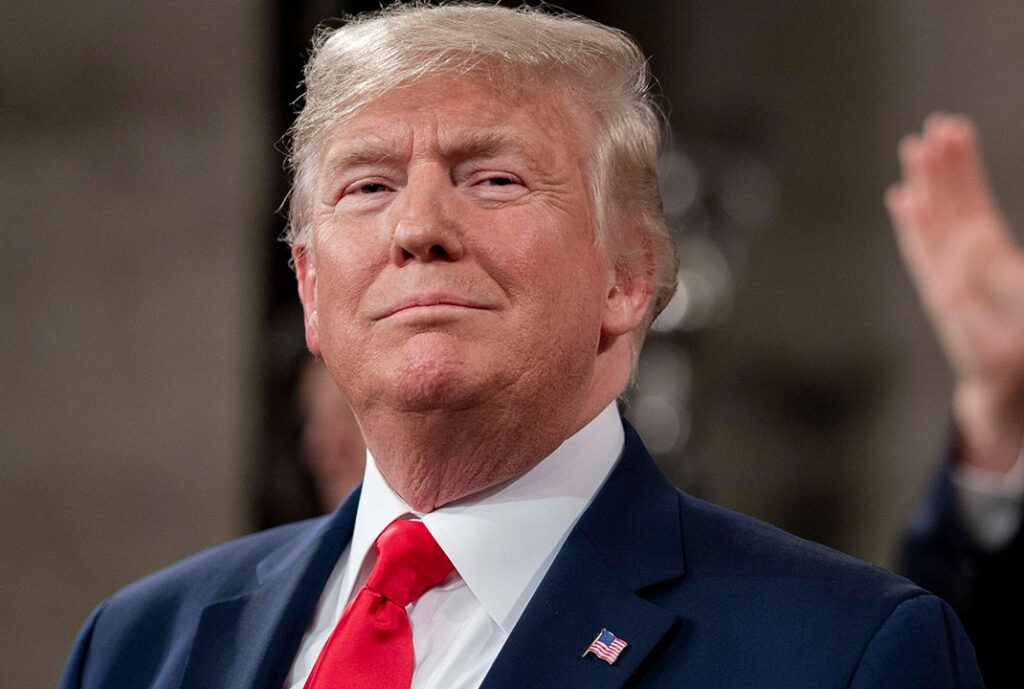
The C-suite reaction has been measured but concerned. During the recent earnings season, tariffs dominated analyst questions, with executives carefully weighing their responses.
Jamie Dimon, CEO of JPMorgan Chase, noted in his recent earnings call: “While there’s potential for these policies to strengthen certain domestic industries, we’re concerned about the broader implications for global commerce and inflation. Companies are actively reassessing their supply chains and pricing strategies.”
Several major corporations have announced contingency plans:
- Apple is reportedly accelerating plans to diversify manufacturing beyond China
- Procter & Gamble has indicated it will likely need to raise prices on consumer goods
- General Motors is reviewing its supply chain to identify components that could be sourced domestically
Economic Indicators and Fed Response
The tariff proposals have complicated the Federal Reserve’s monetary policy outlook. With inflation showing signs of acceleration in response to higher import costs, the Fed faces a challenging balancing act.
Recent economic data points reveal:
- Consumer Price Index increased 3.2% year-over-year in March, above expectations
- Producer Price Index rose 3.5%, with imported component costs showing significant upward pressure
- Consumer sentiment has declined for two consecutive months according to University of Michigan surveys
Federal Reserve Chair [Name] has acknowledged these challenges, stating in recent congressional testimony: “We are closely monitoring how trade policy developments impact inflation expectations and economic growth. Our mandate remains price stability and maximum employment, and we will adjust monetary policy as appropriate to achieve these objectives.”
Market expectations for interest rate cuts have been pushed back, with futures markets now pricing in fewer reductions for 2025 than previously anticipated.
Global Reactions and Potential Escalation
International responses to the new tariff regime have been swift, with several key trading partners announcing or threatening retaliatory measures.
China’s Ministry of Commerce has already announced reciprocal tariffs on U.S. agricultural products, aircraft, and energy exports. The European Union has filed challenges with the World Trade Organization while preparing its own potential countermeasures.
“We’re seeing the early stages of what could develop into a broader trade conflict,” notes Mohamad El-Erian, President of Queens’ College, Cambridge and economic advisor to Allianz. “Markets are pricing in not just the direct effects of U.S. tariffs but the potential for escalating retaliatory measures that could further disrupt global commerce.”
Investment Strategies Adapting
Wall Street strategists are revising their playbooks in response to the evolving trade landscape.
Goldman Sachs recently published a report recommending clients increase exposure to companies with primarily domestic revenue streams and limited dependence on imported inputs. Morgan Stanley has advised clients to consider defensive positioning with a focus on companies with pricing power that can pass increased costs to consumers.
Small cap U.S. stocks, traditionally less exposed to international trade dynamics, have outperformed their large-cap counterparts, with the Russell 2000 declining just 1.3% compared to the S&P 500’s larger drop.
“We’re seeing a significant rotation as investors reassess which businesses can navigate this environment successfully,” explains Savita Subramanian, Head of U.S. Equity Strategy at Bank of America Securities. “Companies with onshored supply chains and domestic customer bases are currently commanding premium valuations.”
Long-Term Market Implications
While the immediate market reaction has focused on sector-specific impacts, longer-term strategic questions loom:
- Inflation Persistence: Will higher import costs become entrenched, forcing a more hawkish Fed response?
- Supply Chain Restructuring: How quickly can companies reorganize global supply networks, and at what cost to margins?
- Corporate Earnings Impact: Will the combined effects of higher input costs, potential demand destruction from inflation, and market access challenges significantly impact the earnings outlook?
- Dollar Strength: How will international currency markets adjust to changing trade patterns and interest rate expectations?
“Markets can adapt to most policy environments given sufficient time and clarity,” notes Jeremy Grantham, co-founder of GMO. “The challenge comes from rapid changes and uncertainty about escalation. That’s what creates the volatility we’re currently witnessing.”
Outlook and Conclusion
As President Trump’s administration continues to implement its trade agenda, market participants are bracing for a period of adjustment and potential volatility. While certain domestic-focused sectors may benefit, the broader market faces headwinds from increased costs, supply chain disruptions, and the potential for retaliatory measures.
Investors would be wise to carefully assess their portfolios’ exposure to global trade dynamics, with particular attention to companies’ ability to navigate higher input costs, their geographic revenue distribution, and their pricing power with consumers.
The coming months will reveal whether these tariff policies achieve their stated aims of revitalizing American manufacturing or instead create lasting challenges for both markets and the broader economy. Until greater clarity emerges, markets will likely continue to reprice risk across sectors as this new trade paradigm unfolds.