


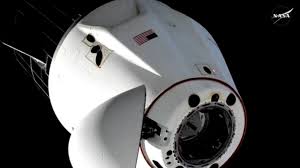
NASA’s SpaceX Crew-9 mission concluded successfully on March 18, 2025, with the safe return of four astronauts after an extended stay aboard the International Space Station (ISS). The crew, comprising NASA astronauts Barry “Butch” Wilmore, Sunita “Suni” Williams, Nick Hague, and Russian cosmonaut Aleksandr Gorbunov, splashed down off the coast of Florida at approximately 5:57 p.m. EDT, marking the end of a mission that lasted significantly longer than initially planned.
Extended Mission Duration
Originally, astronauts Wilmore and Williams were scheduled for a brief eight-day mission to test Boeing’s Starliner spacecraft. However, due to technical issues with the Starliner, their mission was unexpectedly prolonged, resulting in a 286-day stay on the ISS. This extension underscored the challenges and unpredictability inherent in space exploration.
Crew-9’s Return Journey
The Crew-9 mission’s return journey commenced with the undocking of SpaceX’s Dragon Freedom capsule from the ISS at 1:05 a.m. EDT on March 18. After a 17-hour transit, the capsule re-entered Earth’s atmosphere, deploying parachutes to slow its descent before a precise splashdown in the Gulf of Mexico. The astronauts were promptly retrieved and transported for medical evaluations, a standard procedure to assess their health after prolonged exposure to microgravity.
Scientific Contributions
Despite the unforeseen extension, Wilmore and Williams made significant contributions to scientific research aboard the ISS. They participated in approximately 150 experiments, ranging from biological studies to technological demonstrations, thereby advancing our understanding of long-duration spaceflight and its effects on the human body.
Political Reactions
The delay in the astronauts’ return garnered political attention. Former President Donald Trump criticized the previous administration, alleging neglect of the stranded astronauts for political reasons. Elon Musk, CEO of SpaceX, also commented on the situation, expressing that SpaceX had offered to facilitate an earlier return, but the proposal was declined by the prior administration.
International Recognition
The successful return of the Crew-9 mission received accolades worldwide. Indian Prime Minister Narendra Modi lauded astronaut Sunita Williams, acknowledging her Indian heritage and expressing interest in leveraging her expertise for India’s burgeoning space endeavors.
NASA and SpaceX Collaboration
The mission highlighted the robust partnership between NASA and SpaceX. SpaceX’s Crew Dragon spacecraft has become integral to NASA’s crewed missions, offering reliable transportation to and from the ISS. This collaboration exemplifies the successful integration of private companies into national space programs, enhancing mission flexibility and resilience.
Future Implications
The challenges faced during the Crew-9 mission underscore the importance of having multiple reliable spacecraft for crewed missions. While Boeing’s Starliner encountered setbacks, the mission’s successful conclusion with SpaceX’s assistance demonstrates the value of diversified partnerships in space exploration. NASA’s commitment to working with various private contractors aims to mitigate risks and ensure the continuity of human spaceflight operations.
Conclusion
The return of NASA’s SpaceX Crew-9 mission stands as a testament to human resilience and the collaborative spirit of space exploration. Despite unforeseen challenges, the astronauts’ safe return and their scientific contributions highlight the mission’s success. As NASA continues to partner with private companies like SpaceX and Boeing, the lessons learned from Crew-9 will inform future missions, paving the way for sustained human presence in space.